
Thermal visor “Flame” : Monocular 1.5x – 3x

Discover the new Konus 7954 Flame 1.5x-3x thermal visor: Cutting-edge outdoor technology

The Konus 7954 Flame 1.5x-3x thermal visor is the perfect solution for those looking for a reliable and versatile device for their outdoor adventures. Thanks to its 384×288 pixels resolution and high sensitivity sensor, the Flame offers sharp and detailed images, making it ideal for a wide range of applications, including surveillance, hunting and land control.

Technical Features of First Class

The Konus 7954 Flame is equipped with a built-in rechargeable lithium battery, which guarantees excellent autonomy for your outdoor activities. You won’t have to worry about replacing batteries during use, allowing you to fully concentrate on your mission.

One of the most innovative aspects of this headset is the hot spot for Wi-Fi connection, which allows you to see on your phone exactly what you are looking through the headset. This feature is especially useful for those who want to share their observations in real time or for those who need a view on larger or shared screens, without having to disconnect the viewer.

Versatile Magnification and Expandable Memory

With magnification ranging from 1.5x to 3x, the Konus 7954 Flame gives you the flexibility to adapt to different situations. Whether you’re looking to observe details at close range or monitor a large area, this thermal viewer will always give you the best performance.

The headset is also equipped with an 8GB memory card, allowing you to take photos and record videos of your observations. This function is essential to document your experiences and analyze the collected data later.

Robust and Intuitive

Built to withstand the toughest conditions, the Konus 7954 Flame is completely waterproof, making it suitable for use in any environment. With a weight of only 250 grams, it is lightweight and easy to carry, without compromising strength and durability.

The headset has four selectable palettes, allowing you to choose the display mode that best suits your needs and preferences. This feature, along with ease of use, makes the Flame an extremely intuitive device even for less experienced users.

Advantages of the Thermal Viewer

Using a thermal viewer like the Konus 7954 Flame offers numerous advantages in different outdoor situations. In surveillance, it allows you to effectively monitor areas of interest even in poor visibility. For hunters, the thermal viewer is an indispensable tool for detecting prey hidden in vegetation or active at night. In addition, it can be used for livestock control or for safety in campsites and nature reserves.

The Konus 7954 Flame 1.5x-3x thermal visor is an excellent choice for those looking for a state-of-the-art, easy-to-use device suitable for multiple outdoor applications. The combination of advanced technology, robustness and ease of use makes the Flame a reliable solution for professionals and enthusiasts.

Do not miss the opportunity to improve your adventures with the Konus 7954 Flame. Ask in the best armories and discover how this thermal visor can make a difference in your outdoor activities.

News about Konuspot- 80

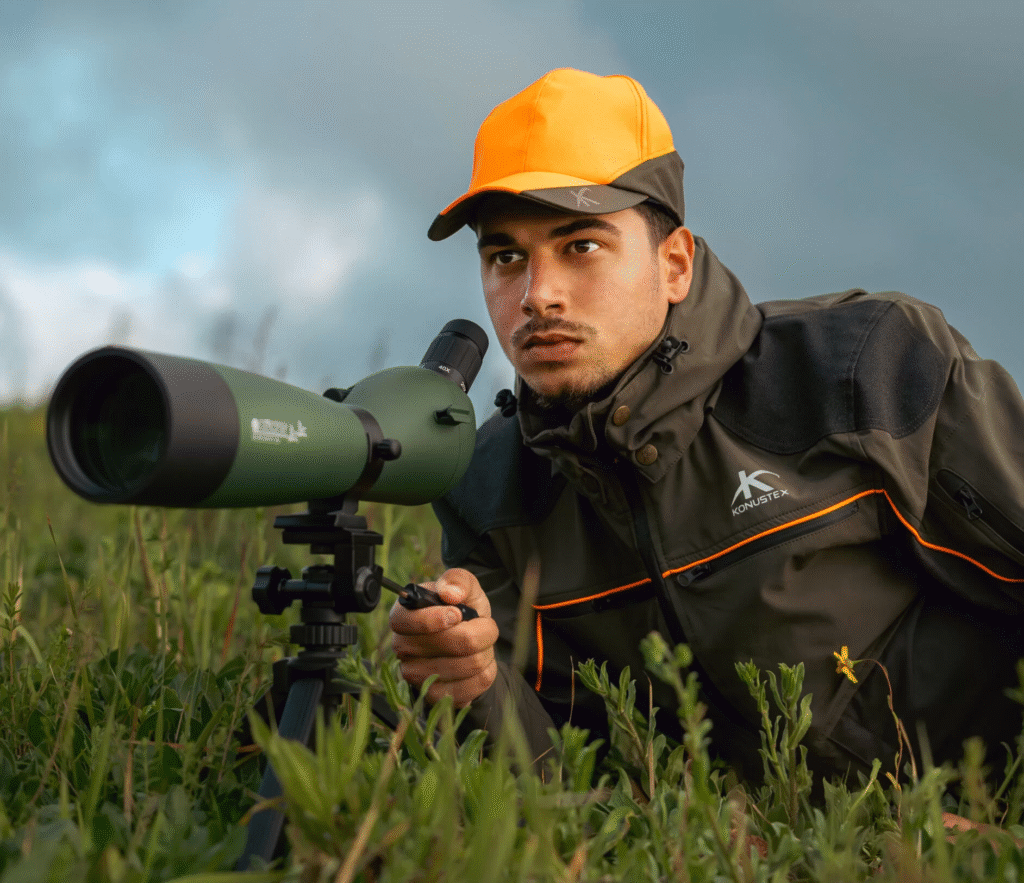
What is Konus’ best-selling telescope?

The Konuspot-80 riflescope from Konus is the flagship of the company’s range, as well as the best-selling model due to its exceptional quality and versatility. Perfect for nature lovers, birdwatchers, long-distance shooting and amateur astronomy, the Konuspot-80 stands out for its advanced features that make it a must-have for any explorer.

Adaptability and Advanced Technology

One of the most innovative features of the Konuspot-80 is its special eyepiece that can be easily adapted to any SLR or DSLR camera. With the supplied adapter and T/2 ring (available separately), you can turn your telescope into a powerful telephoto lens, allowing you to capture detailed images of what you observe. In addition, the Konuspot-80 comes with a smartphone adapter, offering the ability to photograph or capture videos directly from your mobile device. This allows you to take advantage of the magnification power of the telescope to get amazing and detailed shots, amplifying the viewing experience in an extraordinary way.

Quality of Optics and Accessories Included

The Konuspot-80 is equipped with multi-treated optics that provide sharp and bright images, minimizing chromatic aberrations and improving contrast. The 80 mm lens diameter allows a large amount of light to be collected, making it ideal for long-range observation in low-light conditions. Thanks to zoom magnifications ranging from 20x to 60x, you can get well-defined and detailed images, allowing you to observe even the smallest details with amazing clarity.

The Konuspot-80 comes with an included table tripod, ensuring stability during observation and facilitating use in any situation. In addition, a professional bag is included to protect the telescope during transport and to facilitate its movement in all your adventures.

Ideal for Long Range Shooting and More

Thanks to its advanced features, the Konuspot-80 is also the ideal solution for long-range shooting. Variable magnifications and optical quality allow you to get a clear and detailed view of targets, improving the accuracy of your shots. Whether you are a sports shooter or a hunter, this telescope will be a valuable ally in your shooting sessions.

An Evergreen of Konus

The Konuspot-80 is an evergreen product by Konus, a classic that has been revised and improved over the years to always offer the best to its users. Its reliability, versatility and high performance make it a safe investment for anyone looking for a high quality riflescope.

Don’t miss the opportunity to own the Konuspot-80, a riflescope that combines advanced technology, optical quality and practical accessories to give you an unparalleled visual experience. Visit your trusted armourer and ask for the Konuspot-80 to discover for yourself all its incredible potential. Whether you are observing nature, doing long range shooting or exploring the night sky, the Konuspot-80 will be your irreplaceable companion in any adventure

Lighting the hunt: how to choose the right Konuslight torch for every need on the field

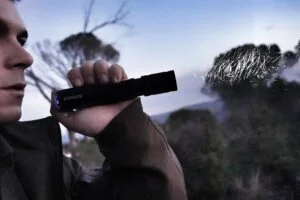
In the world of hunting, a good torch is not a secondary accessory, but an essential tool. Whether it’s reaching the vantage point before dawn, following a trail at sunset or facing a sudden night emergency, choosing the right flashlight can make all the difference. Konus offers a complete range of models designed to cover every need, from the most technical to the most daily. But how do you find your way around the various Konuslight models? Let’s find out together.

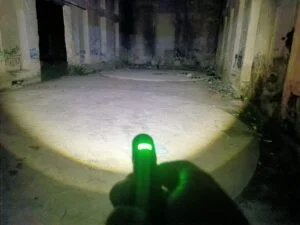
If you are looking for maximum light output in the most demanding situations, you cannot ignore the Konuslight-5K. Its 5000 lumens in turbo mode offer a powerful beam, ideal for illuminating large areas in depth. It is perfect to control the territory in conditions of total darkness, even in the presence of environmental obstacles such as fog or dense vegetation. The adjustable zoom system allows you to adjust the beam according to distances, while the waterproof structure ensures reliability even in difficult weather conditions. An optimal choice for the demanding hunter, who does not want compromises.

Very similar in power, but with complementary features, is the Konuslight-4K, which focuses on extreme versatility. In addition to the 4000 lumens of turbo mode, it offers a lantern function ideal for use in tents, cars or during a break. The integrated red light is a detail much appreciated by more experienced hunters: it does not disturb the fauna and keeps the adaptation of the eye in the dark, perfect for the consultation of maps or small movements. The magnetic base makes it easy to fix on metal surfaces, turning it into a field light. And to never run out of power, the Konuslight-4K also works as a powerbank, charging devices such as smartphones or mobile phones via USB. If you are looking for a multipurpose flashlight to carry around with you, this is your ideal companion.

For those who want a lighter but still powerful torch, the Konuslight-2K is an ideal balance. With 2000 lumens of power, it easily adapts to most operating situations, but is also very convenient to carry. The metal clip allows you to attach it quickly to a pocket or shoulder strap, while the magnetic base is useful for creating a fixed light source in seconds. It is a perfect choice for those who alternate dynamic moments with stationary phases and want to have an instrument always at hand.

A step lower, but always interesting for quality and price, is the Konuslight RC-5, with its 800 lumens. It is equipped with adjustable zoom, which allows you to switch from a wide illumination to a concentrated beam. This makes it useful in contexts where the distance of lighting can vary rapidly, such as in the woods or during the recovery of a garment. It is a flashlight designed for those who move often and want a backlight with good performance, without investing in top-range models.

Finally, the Konuslight-8 is a compact pocket torch, with its 120 lumens and an adjustable zoom that makes it functional at short distances. It is the simplest model in the range, but has the advantage of discretion and extreme lightness. It can be useful as a spare torch, as a light source to keep in the vest or backpack, or for those who need only a light point for short trips.

Ultimately, choosing the right flashlight depends on where and how you hunt. Those who move a lot, often in the dark and in complex environments, will benefit from high-power torches such as the Konuslight-5K or 4K, which combine technology, power and autonomy. Those looking for a versatile and more compact solution will find an excellent ally in RT or 2K, while those who want a simple, inexpensive but reliable option can go for the RC-5, RC-7 or Konuslight-8.

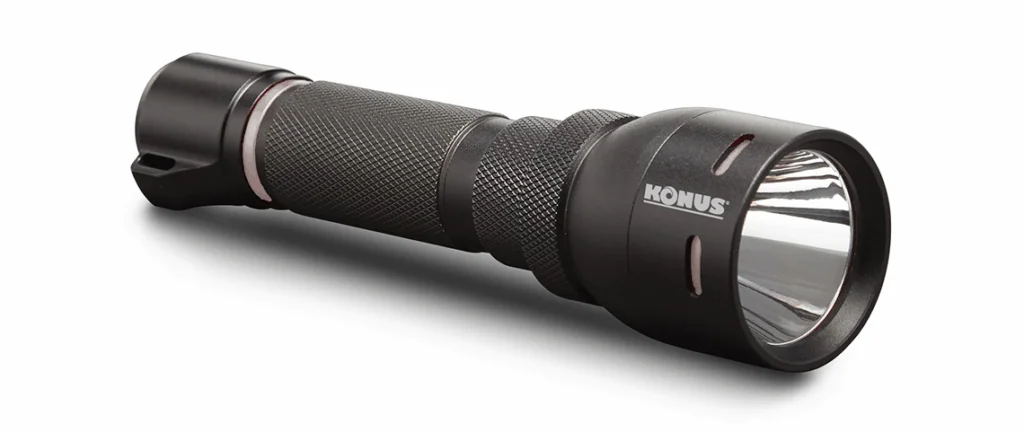
In the world of tactical torches, the Konuslight RC-8 is a top choice for those looking for high performance, versatility and robustness in one tool. This torch is designed for those who need a reliable light support in the operational field, but also for those who want an effective and practical accessory in outdoor activities, in sports shooting or simply in situations where visibility is essential.

One of the most remarkable aspects of the Konuslight RC-8 is undoubtedly its lighting power, capable of reaching 1000 real lumens. This makes it one of the best performing models in its category, able to guarantee exceptional visibility even in total darkness. The light is intense, well-directed and easily adaptable to different needs thanks to the presence of three operating modes: 100% power for maximum visibility, 50% to save energy and a flashing mode, useful in emergency situations or signaling. Each mode can be stored, allowing an immediate recall of the preferred function for the next use.

The structure of the torch is a concentrate of strength and lightness: it is made of aeronautical aluminium, a material known for its high robustness and ability to withstand extreme stresses without weighing. The design is compact and functional, perfect for mounting on weapons thanks to the included rings, compatible with Weaver and Picatinny slides. The supplied remote control has a button located at the end of the wire, easily accessible even under difficult operating conditions, with gloves or in complete darkness.

If you are looking for a product that combines power, intelligence and endurance, the Konuslight RC-8 deserves all your attention. Try it and see how a flashlight can really make a difference in the field.

Choosing the Best Sleeping Bag:  The Coleman® Sleeping Bag Care Guide

You’ve had a great day exploring trails and cooking over a campfire. You’re ready to do it all again the next day, but first you need to get some shut-eye. The difference between waking up rested and energized or waking up tired and sluggish can sometimes depend on the sleeping bag.

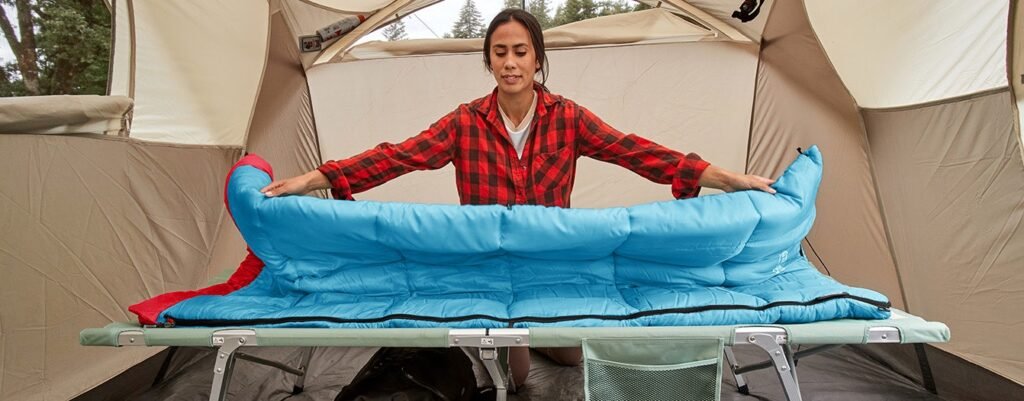
If you crave the comforts of home inside your tent, stick to a rectangular-shaped sleeping bag. You’ll have lots of room to turn from side to side, curl up for a while, and let your feet move around without getting tangled up. If you’re taller than 5’11” or you just like extra space, look for a style made especially for big-and-tall campers, or even two that zip together. If you’re hiking in the backcountry, you may want to try a mummy-shaped sleeping bag that’s great as a backpacking sleeping bag because it packs up fairly compact.

Most Coleman® rectangular sleeping bags are designed to link two similar bags together into a double sleeping bag. Just remember, the more room you have inside the bag, the harder it is for your body to warm up. If you’re going to buy a bigger bag than you need, think about getting one designed for cooler temperatures.

Finding the right sleeping bag also depends on when you plan on going camping because most sleeping bags provide a temperature rating. But everybody is different, and you can’t always rely on the seasonal approach. If you’re the type of person who adds a quilt to the bed in the summer, you may want to choose a bag designed for warmer temperatures,or if you tend to get hot when you’re sleeping, you may want a bag rated for cooler temperatures.

If you plan to camp throughout the year, but don’t want to spend more money than you need to, think about buying for the warmest season and then adding our Stratus™ 50°F Fleece Sleeping Bag for the colder months. The lightweight insert costs less than a regular sleeping bag and is more compact. There’s also the Coleman® Adjustable Comfort Sleeping Bag. It’s rated for temperatures between 20°F and 70°F. When it’s hot, just use the lightweight sheet to cover you, and as the temperature drops, use it as a regular sleeping bag. When it gets really chilly, snuggle up with both.

Our zippers are part of a patented system that plows fabric away from the zipper every time to avoid snags. Fiberlock™ quilting keeps insulation from shifting, causing cold spots. And each of our sleeping bags comes with its own system to make packing it up a cinch: Roll Control™ folding loops and the patented Quick Cord™ fastening system.

Whether you plan to go car camping, backpacking, or just want to pitch a tent in your backyard, you’ll be able to find the right sleeping bag for you from our wide selection.

How to Wash a Sleeping Bag:

Your sleeping bag needs proper, regular cleaning to keep it adventure-ready for life on the trail and at the campsite. Should you machine wash it for convenience or hand wash for care? While commercial washing machines make cleaning easier, hand washing is ideal for delicate care. Follow our tips to keep your sleeping bag—whether a durable Coleman® or your own—in top condition.

Pro Tip: Remember, do NOT dry clean or use a top-loading washer and dryer at home.

What You’ll Need:

  • Front-loading washing machine or large tub
  • Down-specific detergent, mild soap, or detergent for synthetic fabrics
  • Dryer with a low heat setting or drying rack
  • Clean tennis balls or dryer balls

How to Wash a Down Sleeping Bag

  • Just like learning to pitch your camping tent, washing a down sleeping bag requires specific steps to remove dirt and grime and preserve its insulation and cozy loft: 

    Steps for Machine Washing:

    1. Inspect the Sleeping Bag: Close all zippers and fasteners, check for tears, and repair them before washing.
    2. Choose the Right Washer: Use a large-capacity front-loading washer to avoid damage.
    3. Add Detergent: Follow instructions for down-specific detergent.
    4. Select Cold Water: Wash with cold water to protect insulation and fabric.
    5. Use Gentle Cycle: Prevent wear by setting the washer to a gentle cycle.
    6. Run an Extra Rinse: Remove all detergent residue for optimal down performance.
    7. Dry Properly: Tumble dry on low heat with tennis balls to restore loft, pausing to fluff and check dryness.
    8. Ensure Complete Dryness: Verify the bag is fully dry before storing to avoid mold or mildew.

    At Coleman, our PEAK1™ Mummy Down Sleeping Bags are perfect for cold-weather adventures. Its 650-fill RDS-Certified Duck Down offers warmth without bulk, while a water-repellent shell, thermolock draft tube, and neck baffle lock in heat. Eco-friendly materials like recycled nylon add sustainability. Lightweight and compressible, it’s ideal for backpacking or camping, with a five-year limited warranty ensuring long-term durability.

How to Wash a Synthetic Sleeping Bag

Roll out your synthetic sleeping bag and settle in—because although synthetic sleeping bags are durable and easier to clean than down bags they still require specific care: 

Steps for Machine Washing:

  1. Prep the Bag: Close all zippers, Velcro, and snaps. Repair any tears to prevent further damage during washing.
  2. Choose a Front-Loading Washer: Avoid top-loading machines with agitators, which can damage synthetic insulation.
  3. Add Detergent: Use a synthetic-safe detergent—regular detergent may leave residue or harm the insulation.
  4. Set the Cycle: Use cold water and a gentle or delicate cycle. Avoid heat which can melt synthetic fibers.
  5. Extra Rinse: Run an additional rinse cycle to remove all soap.
  6. Dry the Bag: Add tennis balls to prevent clumping and restore loft before tumble drying on low heat. Periodically check for dryness and fluff by hand as needed.

How to Hand Wash Sleeping Bags:

Just as you would take the utmost care in mapping out your next backcountry hiking route, hand washing requires a bit of planning and attention to detail to keep your gear performing at its peak:

  1. Fill a Tub with Cold Water: Mix down- or synthetic-safe detergent into the tub water based on the amount recommended on the packaging.
  2. Soak the Sleeping Bag: Submerge the sleeping bag and gently clean its entirety in the tub.
  3. Rinse Thoroughly: Drain the tub leaving the bag inside of it and then refill the tub with clean water. Rinse the sleeping bag. Repeat this step until no suds remain.
  4. Press Out Excess Water: Press (don’t wring) the bag to remove water.
  5. Dry as Above: Use a low-heat dryer or air-dry flat in a shaded, well-ventilated area, fluffing occasionally.

How to Spot Clean Sleeping Bags: Spot Cleaning Tips

For minor stains or dirt, spot-cleaning is quick and effective:

  • Use a soft sponge or toothbrush with a small amount of mild soap.
  • Focus on high-contact areas like the hood, zipper, and foot box.
  • Rinse with a damp cloth to remove soap and air dry the area before storing.

How to Dry Down & Synthetic Sleeping Bags

Proper drying is critical for maintaining the loft and insulation of a down sleeping bag. Follow these steps for the best results:

Steps for Drying a Sleeping Bag:

  1. Use a Commercial Dryer: Place the bag in a large dryer on the lowest heat setting.
  2. Add Dryer Balls: Toss in 2–3 clean tennis or dryer balls to restore loft and prevent clumping.
  3. Check Regularly: Pause every 15–20 minutes to fluff by hand and monitor heat.
  4. Dry Thoroughly: Allow several hours for drying to ensure all moisture is gone, preventing mold or odors. Synthetic bags dry faster than down but ensure all moisture is gone before storage to prevent mold or odors.

If you don’t have access to a dryer, lay the bag flat on a clean, dry surface in a warm, well-ventilated area, flipping it occasionally until completely dry. Then, when ready to use your bag, try out a camping cot for additional comfort.

How to Roll a Sleeping Bag

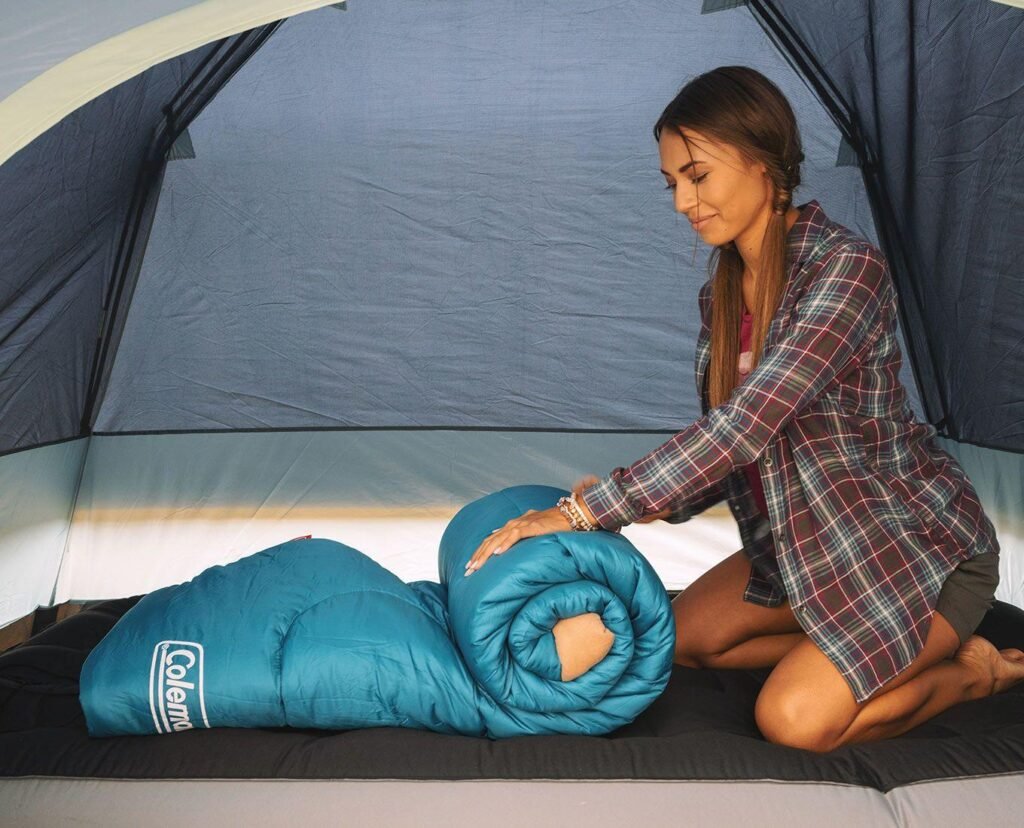
The rolling process is generally the same for most sleeping bags, though some have special features to help pack them up. For added simplicity, several Coleman® sleeping bags feature the Roll Control™ system—a toggle and loop system along the sides to keep the bag straight when rolling up. Regardless of your bag, follow these steps for proper rolling:

  1. Zip it up: Ensure the sleeping bag is completely zipped.
  2. Fold lengthwise: For how to fold a sleeping bag, lay it flat, smooth out wrinkles, and fold the bag in half like a hotdog bun.
  3. Use Coleman® Roll Control™ system: Align the toggles and loops on the sides to keep the bag straight while rolling.
  4. Roll tightly: Start from the foot end, rolling tightly as you go.

For mummy-style bags, skip the rolling and stuff the bag feet first into its compression sack. This method allows the air to escape from the head end while saving time.

Sleeping Bag Storage

Proper storage ensures your sleeping bag stays in top condition. For instance: 

  • For short-term storage, keep the sleeping bag in a compression sack while you’re camping. 
  • For long-term storage, store it in a large storage bag to maintain loft and lifespan when you’re back home.

Then, you’ll follow these steps to store your sleeping bag for both short and long-term storage:

  1. Prepare Your Compression Sack or Large Storage Bag and ensure the sack is appropriately sized for your sleeping bag. 
  2. Stuff the Sleeping Bag instead of rolling the bag, push it into the compression sack or bag in small sections, using gentle, but firm pressure to pack the bag.
  3. Double-check the Compression for sharp folds or areas of excessive strain.
  4. Store it in a dry, climate-controlled area, keeping it away from direct sunlight.
  5. Air out and fluff your bag periodically during off-season when storing long-term.

Post-Cleaning Care Tips

To extend the life of your sleeping bag:

  • Use a sleeping bag liner for easier cleaning.

Stay Adventure Ready with Coleman

With the right care and attention, your sleeping bag will continue to provide warmth and comfort for all your outdoor adventures. Whether you choose to machine wash, hand wash, or simply maintain it through regular rolling and storage, proper cleaning and care are essential for extending its lifespan. 

How to Clean a Tent: The Coleman® Tent Care Guide

Your tent is more than just gear—it’s your refuge from outdoor elements and your home away from home. As outdoors enthusiasts, we know that proper tent care helps your tent stand strong through your adventures. Neglect it, though, and it could leave you out in the cold—literally. Instead, we’ll teach you how to clean a tent, prevent mold, and store it properly, so it’s ready to hit the trail.

  • Ready to master your camping trip? Check out our lesson on Camping 101 
  • Cleaning Your Sleeping Bag? Learn Maintenance in our How to Wash Sleeping Bag Care Guide

How to Wash a Tent

Just as you care for your Coleman® sleeping bags and outdoor gear, your camping tent needs cleaning to maintain its performance. Dirt, UV rays, and moisture affect your tent like wind and rain on your campsite. Follow these steps to learn how to wash a tent the Coleman way.

  • Considering A Tent Upgrade Too? Shop Coleman Camping Tents
What You’ll Need:
  • Mild soap (No detergents).
  • A sponge or soft-bristle brush (gentle as a breeze).
  • Clean water.
  • A shady, breezy spot for drying.

1. Spot-Clean Like a Pro

  • Lay your tent flat on a clean surface—your campsite’s picnic table will do in a pinch.
  • Dampen your sponge with mild soap and water. Focus on areas where mud, sap, or sunscreen tends to leave a mark, such as the floor and entryway.
  • Be gentle! Rough scrubbing can damage the water-protective coating and reduce the strength of the fabric, causing water leakage.

2. Rinse Away the Grime

  • Using clean water, rinse thoroughly to wash away every bubble of soap. Leftover residue can weaken the fabric over time.

3. Air Dry Thoroughly

  • Spread your tent out in a shaded, breezy spot. Like wet firewood, a damp tent is just asking for trouble. Never toss it in a dryer; high heat is the enemy of waterproof coatings.

No matter your tent’s style— from dome tents to cabin tents— you can learn how to clean a tent like a pro. When it’s time to upgrade, we offer a variety of tents designed for your exploration. Compact and easy to set up, our dome tents are perfect for backpackers and campers seeking quick shelter. While our modified dome tents add space and versatility with extended vestibules and extra headroom. For families or large groups, our cabin tents feature upright walls and spacious interiors for comfort. With the proper tent care in this guide, your tent can stay adventure-ready for years to come.

Can You Wash a Tent in the Washing Machine?

Tempting as it might be to let your washing machine handle the dirty work, don’t do it! The wash cycle can tear the fabric, destroy waterproofing, and ruin seams, so hand washing is best.

How to Prevent Mold in Tents

Mold is the bane of any camper’s existence. It can turn your tent into a smelly mess faster than a summer thunderstorm. Here’s how to help keep your tent mold-free:

  1. Dry It Before You Stow It: Even a small amount of moisture can invite mold. If your tent gets packed up wet after a rainy night, set it up to dry as soon as you can.
  2. Store It in the Right Spot: Skip the damp basement or musty garage. Choose a cool, dry place where your tent can breathe.
  3. Ventilate While You Camp: Open the windows or leave the door slightly unzipped. A little airflow goes a long way in preventing condensation inside the tent. Especially, when dirt and organic debris can hold moisture, creating the right conditions for mold.

Remember, your tent must be stored dry. If you must close camp in the rain, open your tent and set it up ASAP to avoid mildew and odors. Store your tent between camping trips in a cool, dry place.

Tent Care Pro Tips

  • Shield It from the Sun

Too much sun can damage your tent fabric. If your tent will be set up for a week or longer, place it in a shaded from the surrounding area, or use a rainfly to help protect your tent from damage by the elements.

  • Handle Poles with Care

Don’t let your poles snap into place with a clang! Extend them section by section to keep shock cords and joints in tip-top shape. When collapsing your sock-corded poles, first collapse them near the center to avoid stressing cords. Push poles through the pole sleeves to avoid pulling as this can tear the shock cord or the tent body. 

  • Time to Upgrade Your Poles? Shop Coleman Tent Poles
  • Sweep Before You Roll

Before packing, shake or sweep out leaves, twigs, and dirt. No one wants to find nature’s leftovers on the next trip.

  • Use a DWR Spray to Enhance Rain Protection

Apply a durable water-repellent (DWR) spray to your tent’s rainfly and exterior fabric as needed after cleaning to bolster its waterproofing. This helps water bead up and roll off, keeping you dry even during unexpected downpours.

  • Use Guy Lines if Stakes Bend 

Under hard ground conditions, stakes may bend. Tent stake replacements are available, but not always handy at a campsite. A tent may also be tied using guylines, to rocks or other stable objects as a temporary fix.

Is Hunting Really On The Decline?

Some of us have been told over the years that the hunting population in the US is on the decline. However, as a matter of fact, the hunting population is actually increasing and has been for years. 

In 2021, which is the last year publicly recorded, there were 38.59 million hunting licenses, tags, permits and stamps in the U.S. — that is more than twice the number of total hunters (all species, big and small game). Unfortunately, because of the nature of how hunting licenses are issued, that’s only an approximate estimate and the real number of hunters in the United States could be different. With that being said, Texas sold the most licenses, over 1 million; and Rhode Island sold the fewest, around 8,000. Those numbers represent individual hunters in each state, but many hunters buy licenses in several states. 

Harvest reports and license sales provide each state’s data. This information helps wildlife agencies track trends and set management policies. States often collect the data differently, but it’s done most commonly with surveys, check stations, and voluntary or mandatory reporting. Even states with mandatory reporting use scientific estimates to determine or double-check harvest data.

However, the question still remains, is the hunting industry really on the decline? Everyone loves some good statistics about their favorite past-time.So, here are five quick facts:

  1. According to a 2016 report from the National Shooting Sports Foundation, the hunting industry supports more than 525 thousand jobs, which is more than three times that of the oil and gas extraction industry. 

  2. From 2020 to 2021, the hunting and trapping industry grew in market size from $888.5 million in 2020 to $890.1 million in 2021. This is less than 1% growth between years but still shows that the industry is growing overall.

  3. Hunting continues to be an overwhelmingly male pursuit. 90 percent of US hunters aged 16 years and older are male, representing 10.3 million people and 8 percent of the total US population. In contrast, only 10 percent of hunters are female. That’s a mere 1.1 million people and not even 1 percent of the US population.

  4. Hunters spent approximately $27.1 billion on hunting in 2016. Individual hunters spend an average of $1,896 on hunting each year, according to a 2011 report, representing approximately 5.5% of their total income.

  5. In 2021, the top 10 states with most total hunters were Texas (1,094,753), Pennsylvania (945,731), Georgia (724,269), Tennessee (694,458), Wisconsin (666,670), Michigan (642,242), North Carolina (609,131), New York (550,868), Minnesota (545,300), and Oklahoma (512,724.) Back in 2004, it was Texas (1,027,908), Pennsylvania (1,048,731), Michigan (870,432), Tennessee (725,110), New York  (696,679), Wisconsin (689,099), Minnesota (585,104), Missouri (539,062), North Carolina (433,135), and Arkansas (402,493.)

It is important to note that the future of hunting remains bright in 2022, and those of us who hunt know that it is a lifestyle, not just a sport. Granted, there may be a lot of people who disagree with this, but at the end of the day, statistics don’t support those opinions. In 2004 there were about 15 million licensed hunters in the U.S. Granted the numbers dipped slightly below that total during the following decade, but then peaked at 15.6 million in 2018. Whatever side of the line you are on, it is hard to deny that recreational hunting provides a lot of benefits for our country and the younger generation deserves to reap the benefits as much as we have.

Kite APC Stabilised Binoculars: a game-changer in optics

I’ll be honest: reviewing binoculars can be a tricky business. The trouble is that it’s all very subjective, with the difference between a great pair and a really good pair often being a relatively fine margin – which can be difficult to convey in print. My preference leans towards brightness; for other users it’s clarity or contrast. That said, with all other things being equal it’s often the field of view that becomes the deciding factor. In short, binos are perhaps the ultimate “try before you buy” shooting accessory, as often it’s only a side-by- side comparison that enables you to appreciate the subtle differences when it comes to quality glass.

However, that may well be set to change. I recently received an invitation from Browning to test its new X-Bolt 2 centrefire up in Scotland – lowland stalking for roe followed by a hind cull the following day. I read the invitation eagerly, almost ignoring the mention of the new copper ammo we’d be using and the Kite binos that had been bundled into the presentation. These press junkets offer the bigger brands a chance to showcase a whole host of products, both in-house and from their affiliates.

Obviously the new rifle was the star of the show, but it was a member of the supporting cast that really shocked the assembled hacks — and indeed the beatkeepers and gillies on the Gordon Estate, our host for the event

Revolutionary

Put simply these new binos are, quite frankly, revolutionary. They employ mechanical image stabilisation to eradicate shake. This approach should not be confused with digital stabilisation. This is not a digital product – the image is direct from the glass and is indistinguishable from that of traditional day binoculars. They are bright, clear, have great definition and present a very nice, flat image with plenty of contrast. And they are free of the shake that plagues traditional handheld binoculars.

To put things into perspective, at the end of the event there was something of a scrum as all the attending journalists scrambled to try to secure a pair for review. More importantly, this scrum also involved the beatkeepers and gillies on the estate, who were just as blown away by these binoculars as the assembled press pack. Scottish gillies and journos from across Europe aren’t easy to impress when it comes to guns, gadgets and gizmos – but impressed they truly were.

Adrien Koutny is the main man at Browning when it comes to impressing the press, and I could tell from his wry smile as we arrived at the range to zero our rifles that he had something up his sleeve. The rifle was never going to disappoint – a new gun never reaches this stage unless it’s been thoroughly tested. However, it was the glint in his eye when he handed over the binos that caught my attention.

Adrien was careful to hand them out powered-down and the reaction was exactly what you’d expect from a first encounter with a very nice pair of binos. He then urged us to flick the switch that activates the image stabilisation. The reaction was instant and unanimous. Wow! Don’t forget, this was a bunch of grizzled old hacks, most of whom have used or reviewed all manner of shooting optics. These new Kite APC Stabilized binos really are something special, and I’ll go out on a limb and say that they may well offer a leap in performance – in terms of day optics – on a par with that of thermal technology.

Special effects

At this point you may be thinking this all sounds a bit too advertorial. Surely they can’t be that revolutionary? Trust me, they are amazing. So here’s my favourite metaphor to convey the leap in performance on offer. In movies, a classic special effect is to time-ramp a sequence at a crucial point to enhance the action and drama of a scene, seamlessly transitioning from real- time to slo-mo. That’s what it feels like when you power on the stabilisation.

Instead of fighting the handheld shake of traditional binos in a desperate attempt to focus on the detail, the stabilisation instantly takes away all the physical, visual and mental effort involved in trying to process a shaky image. You instantly focus on the detail as the image glides over the scene. Obviously it’s all in real-time, but the feeling is similar – you find yourself gazing into the image, not at it. Spotting holes in the targets down range was obvious and instantaneous, as the guesswork involved in discerning fine detail at distance was completely eradicated.

There are obvious applications for this tech across all manner of shooting sports and indeed in civilian life. But for stalkers struggling to judge the sex and condition of deer at distance, it’s a transformative experience. Spotting from a moving vehicle is transformed, even over rough ground. I hate this phrase, but they truly are a game-changer in terms of day optics.

Pleasure

There’s also a less obvious benefit in terms of fatigue. Staring through binos, and the constant mental, visual and physical effort required while struggling to focus on fine detail with unsupported binos, can be exhausting. This device, and the engineering behind it, makes endless glassing a pleasure rather than a chore. If my slo-mo analogy is hard to grasp, a more typical example would be a DSLR camera that features optical image stabilisation – some smartphones offer a similar function, as does a camera mounted on a gimbal. All the above are designed primarily to smooth movement of the frame itself, but in our case the benefit is the ability to effortlessly focus on the detail within the image through a true optical rather than digital platform.

Stunning

Although the design looks a little different, the basic binocular functionality is as expected. There is plenty of dioptre adjustment, twist-up eye cups, a simple push-pull adjustment for ocular distance and a focus wheel. That’s it, aside from the all-important top wheel to engage the stunning image stabilisation.

Is there a compromise? Yes, to a certain extent – the 88% light transmission rather than the 90%- plus of alpha glass – but that’s a trade I’d make in a heartbeat for the added functionality and performance these binoculars offer. An absolute must-try before buying your next pair of binos, but very highly recommended.

Field-Ready: A Step-by-Step Guide to Deploying Acoustic Bat Surveys

At a live virtual training we recently hosted, Bat Biologist and Co-Owner/Co-Founder of Edgewood Environmental Consulting Mike Fishman walked us through the process of conducting acoustic bat surveys, from pre-field planning through deployment, programming, and data collection.

While Mike’s presentation focused on presence/probable absence protocols for threatened and endangered species, these techniques can also be applied to bat research and other types of bat studies.

Read on for a checklist of things to keep in mind when deploying this field season!

Part 1: Preparing for Field Deployment

So, you’ve prepared a study plan, run it by the necessary officials, and received the necessary approvals. Now, you’re ready to go into the field! Before heading out, double-check that you have everything you need:

  • Bat Recorders: (This one seems obvious, but you’d be surprised!) Wildlife Acoustics offers two passive bat recorders: the Song Meter SM4BAT FS and the newer Song Meter Mini Bat 2. Both are exceptional ultrasonic recorders, capturing more bat calls and less unwanted noise, but they have distinct differences.

    The SM4BAT FS is the larger of the two and can accommodate cabled microphones, connect to an external power source, or run on battery power. In contrast, the Mini Bat 2 is compact, lightweight, and can record for up to 125 ten-hour nights on battery power alone (not to mention it can also record wildlife that vocalizes within the typical range of human hearing).

    If you’re unsure which option is best for your project, we’ve created a short quiz to help you make an informed decision.

  • Ultrasonic Calibrator: A 40 kHz pure-tone generator to test microphone functionality during setup and retrieval. This is to verify (and document) that your microphone is working properly.
  • Memory Cards: For shorter deployments, consider 64–128 GB SD cards with high read/write speeds (e.g., SanDisk Extreme Pro) to reduce download times. For extended deployments (e.g., over two months) or if you are in an area with very frequent bat calls (e.g., inside a roost), you’ll want to use larger cards with slower read and write speeds.

    Pro tip: When choosing a memory card, pay attention to its advertised upload and download speeds, and consider whether you prioritize quick data retrieval over battery-power savings or vice versa. A card with a fast download speed (e.g., 200 MB/s) can accelerate the data download process and may be a good option for shorter deployments. However, a slower card uses less power on average and is better suited for longer deployments.

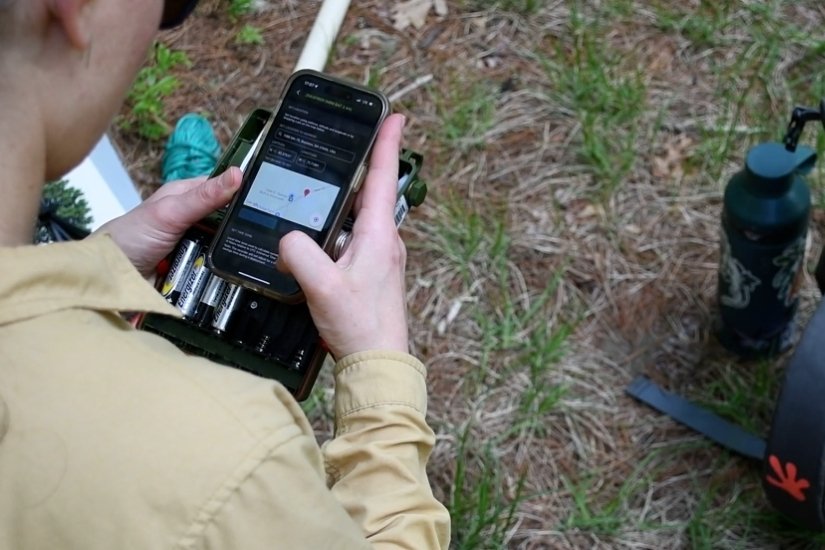
  • Batteries: Always use fresh batteries. This is critical because combining new batteries with used ones may cause them to leak corrosive chemicals and damage your recorder.
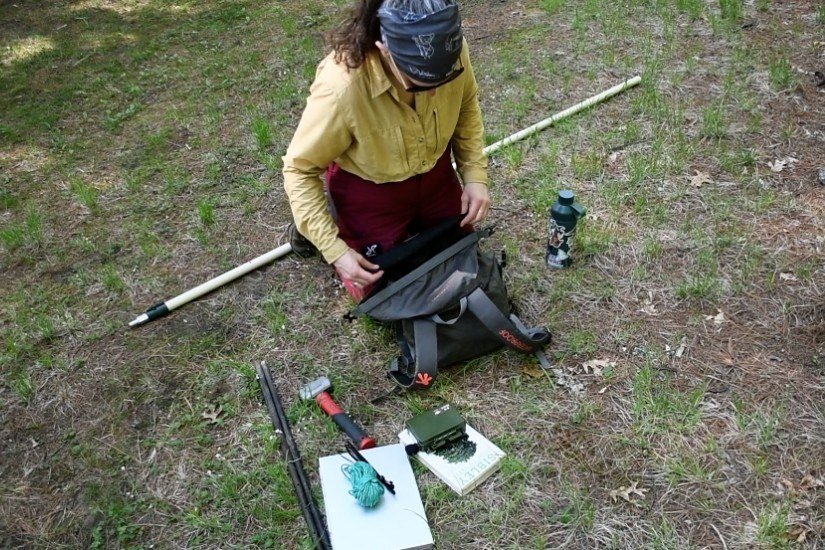
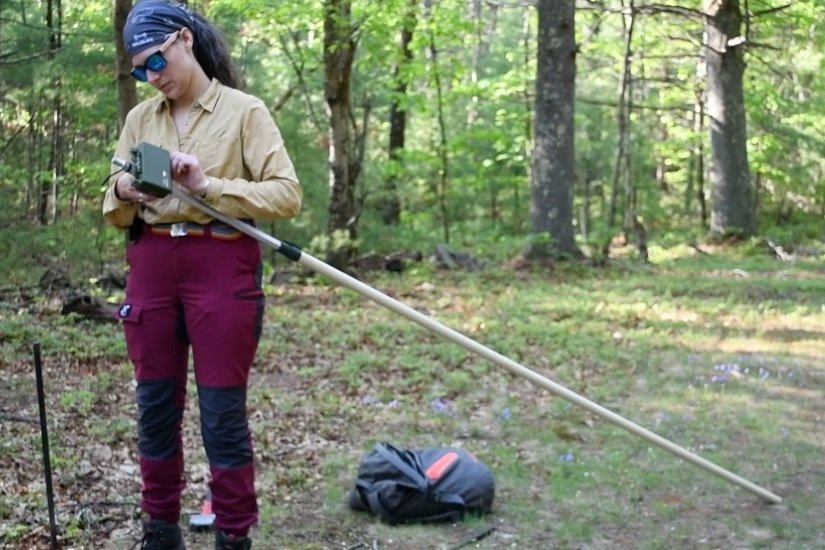
  • Mounting Gear: Bat recorders should be elevated three meters (10 feet) above the ground. Mike uses electrical metallic tubing with flagging tape for visibility and height verification, as well as zip ties for attachment—a rebar stake in the ground anchors the pole.

    Or, if you prefer to use a tripod, the back of the Mini Bat 2 features a tripod-style threaded mounting point that can also accommodate accessories designed for mounting trail cameras and similar devices.

  • Security Supplies: Cable locks to attach your recorder to a pole and/or padlocks for the enclosure itself to prevent unauthorized access. This is important if your recorder is located near a trail or other public-access area.
  • GPS: For obtaining coordinates. A handheld unit is fine, or if you are using the Mini Bat 2, you can set coordinates using your mobile device’s GPS through the free Song Meter Configurator companion app. (Watch a brief video tutorial here; simply fast-forward to the 4:10 timestamp.)
  • Documentation Tools: A camera for capturing protocol photos and a field notebook for taking detailed notes, such as where you were, what the local environment looked like, what cover types and tree species were around, the recorder’s distance to clutter, etc.
  • Smartphone or Tablet: For use when configuring a Mini Bat 2 via the Song Meter Configurator app. (A desktop version of the Configurator can be used to program the SM4BAT FS; however, you can use its built-in keypad and digital display to program–or make any last-minute changes to programming–in the field.)

  • Safety Gear: Protective boots, high-visibility vests, and any other equipment necessary for your field site.

Part 2: Selecting Survey Sites

Proper placement of your equipment is key to capturing quality recordings:

  • Habitat Types: When planning your study, you mapped areas where bats are likely to move (e.g., roost trees, foraging and drinking areas, and travel corridors) to determine where to place your acoustic detectors.

    Edge habitats, such as forest-marsh margins or along streams and ponds with surface vegetation (like duckweed or water lilies), are ideal deployment locations because they have fewer flat, smooth surfaces, like open water, that can cause echoes (more on this in a minute).

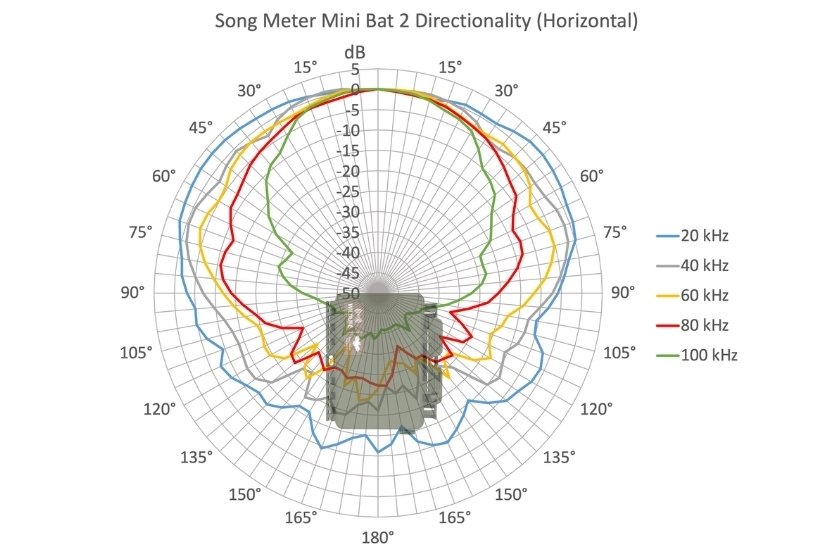
  • Clutter-Free Zones: Look for at least 15 meters of open space in front of the microphone. An omnidirectional mic captures sound from all directions, but it is most sensitive to what’s directly in front of it, as you can see with these charts:

  • Clutter can include dense brush, shrubs, and small branches that bats would need to fly through or would alter the shape of their calls.

    Pro tip: In a clear area without clutter, bats use “search phase” calls that have a longer duration, providing more identifiable information.

  • Avoid Echo Sources: Stay away from reflective surfaces, such as the ground, bodies of still water, large walls, rock faces, or nearby trees. When the microphone is very close to a solid surface, sound reflecting off that surface can interfere with incoming sound and create small gaps in the recorded echolocation call, which you want to avoid.

    Fastening the recorder to a narrow pole or a similar object is preferable to mounting it directly to a large object, such as a tree trunk.

  • Species-Specific Considerations: For example, forest-interior bats like Myotis septentrionalis (Northern Long-eared Bat) require that you set detectors under the canopy but above shrubs.
    Elevation: Mount detectors at a height of three meters (10 feet) above ground.

Part 2: Selecting Survey Sites

  • Labeling: Mark each SD card and associated gear with the detector’s serial number, and keep these together. This will help you track any issues that may come up in the field.
  • Update Firmware: Always download the latest version of your recorder’s firmware. Updates can be performed in the field and are essential to ensure that your recorder receives new features and periodic maintenance updates.
  • Programming: Use your smartphone or tablet and the Song Meter Configurator app to program your recorder’s precise location, date, time, recording schedule, and settings via Bluetooth (no Internet connection required). Here’s a quick video that walks you through how to use the Song Meter Configurator.

    Pro tip: Give each recorder a unique name that includes its serial number in the name. This naming convention will help you trace recordings back to their origin.

  • Deployment Checks: Verify microphone and battery status, calibrate, and document everything. Mini Bat 2 calibration guidelines and this SM4BAT FS calibration video tutorial are available for your convenience. Other recorder models will, of course, have their own guidelines.

    Pro tip: Take a screenshot of your result to document that your recorder and the microphone were operating successfully at the time of setup. Do this again at the time of takedown.

  • Photographic Evidence: Capture two images per setup: one showing the surrounding habitat and another showing the detector’s placement.
  • Data Keeping: Document your deployment dates, project name, recorder’s position, location, habitat, equipment used, microphone angle/orientation/height/distance to clutter, and your recording schedule, including sunrise/sunset times, etc.

    If you record full-spectrum WAV files, the Mini Bat 2 and SM4BAT FS save much of this info to the metadata of each recording. But, manual record-keeping may be required by the protocol you’re following and provides redundancy

Part 4: Retrieval and Data Management

  • Check Status: Before collecting your Mini 2 Bat, use the Song Meter Configurator app to check the status of your recorder and take a screenshot to document. On the SM4BAT FS, press “Check Status” and take a photo of the recorder’s status screen.
  • Recalibration: Check the recorder’s microphone function at pickup to verify (and screenshot/document) that it was functioning properly throughout the deployment.
  • Card Handling: Keep memory cards matched with their detectors to track performance and troubleshoot issues.
  • Data Download: Use high-speed readers to reduce wait times; WAV files can be large.
  • Note Archiving: Keep detailed field notes and archive them for future reference or agency requests.
  • Housekeeping: It’s tempting to toss your recorders in a closet at the end of the season. Resist this urge! Clean and store your units properly. Remove all memory cards and batteries (the latter can leak corrosive material); clean the equipment if necessary, and store it in a cool, dry place.

5 Ways To Make The Most Of Your Animal Behavior Study With Acoustic Monitoring

The mysteries of the animal kingdom are wonderfully vast and full of opportunity for new discoveries.

With animal behavior studies, you have a chance to decode a secret language that’s “spoken” only by a certain species.­­

Was that a warning call? A distress signal? A male wooing a female? Or is there, perhaps, a conflict at play?

Whether you’re researching birds, bats, frogs, primates or some other species, acoustic monitoring can help in more ways than you might expect.

Here’s how you can make the most of your animal behavior study with the help of acoustic recorders

1. Get a more natural take on your research subject

First and foremost, when you’re studying animal behavior, you want to ensure that animals are acting naturally. And as we know, animals often behave differently when humans are present.

Perhaps an extreme example – but imagine trying to record the vocalization of a Grizzly Bear in person. If the bear were to spot you, it might immediately think “Dinner!” and quickly alter its behavior in a way that you definitely don’t want!

With acoustic recording, you can set up recorders that capture the soundscape silently while animals go about their business normally. Days, weeks, or even months later when you retrieve your recording, you will have a record of wildlife vocalizations without creating numerous habitat disturbances.

However, this is not to say that your presence in the field would never be beneficial. For example, say that you notice in your data that the bird you’re monitoring makes a particular call several times each day. Without more context, it might be difficult to deduce what this call means.

That’s why acoustic research is often complimented by other methods. You might deploy a trail camera alongside the recorder, or you might still occasionally find yourself behind binoculars observing your species to better understand your data.

And in this case, you might notice that this bird makes this particular call when a predator flies by, and therefore, determine that this vocalization is most likely a warning call. With that in mind, you can head back to the lab with new insight.

2. Improve your analysis

It’s unlikely that you will begin to understand the behavior and communication style of a species in just few isolated encounters. And yet, if you’re manually collecting data, a few opportunities might be all you get. In-person field visits are often limited by time, costs, weather, and many other factors.

By passively recording vocalizations with an unattended recorder, you not only increase the amount of data you can collect, but you also get ample opportunity for playback. This allows you carefully analyze vocalizations and better piece together a picture of what that chirp, buzz, or croak might represent. Repeated listening helps to remove observer bias that you might’ve experienced if you were simply making notes in the field.

With recordings on hand, you also get the opportunity to get feedback from your professional network. For instance, having trouble deciphering the different bat calls that you recorded? Simply send the audio file to a colleague and ask for their take – all without dragging them out to that dilapidated (and perhaps dangerous) building with the bat roost.

When you have recordings, you can rewind, replay, and re-examine vocalizations as many times as you’d like – with the ears of as many experts as you need

3. Avoid the risks of recording at night

Studying the behavior of nocturnal wildlife can be especially tricky. Not only is visual detection greatly reduced by the darkness, but you also might face other inherent dangers of night.

Say you are researching an endangered bird that nests exclusively at the tops of tall, old-growth trees. And let’s also say the bird typically only leaves the nest during darkness – before dawn and at dusk. To manually monitor this bird, it would require you to venture into the night where, even if you manage to avoid predators, you still run the risk of injury by navigating the woods with little light to guide you.

With acoustic recorders, you will reduce the number of trips out to the field. And, you’ll have the option to deploy and retrieve recorders in daylight, so you can get a good night’s rest and more safely access difficult terrain.

And once you retrieve your recordings, you can conveniently review your data from your lab during more reasonable hours.

4. Increase your flexibility

Opting for acoustic recording will give you plenty of flexibility, too.

For example, say you are recording the endangered Northern Spotted Owl. Because they are nocturnal, you wouldn’t want to have to sift through 24 hours of recordings when the owls are only active during half of that time. Instead, you could set your device to begin recording at dusk and end it at dawn.

You also have the option to schedule your recorders to sample frequently throughout the day or at specific times. This might be ideal for scenarios where you know the time day that the species is most vocal.

5. Save on both time and costs

As a researcher with tons of tasks on your plate, you might dream of being able to multiply yourself in order to tackle your duties of the day.

In a sense, acoustic monitoring allows you to do just that. By deploying recorders in multiple locations, you can monitor numerous sites at the same time. With recorders simultaneously gathering data from multiple sites, you will save time and reduce the costs associated with your research.

For example, with acoustic recorders, you’ll likely save on the cost of gas for your car, field gear, and man hours. This frees up funds to spend in other areas that better serve your study. Surely, you can imagine better ways to allocate those precious research dollars!

You might even be able to expand your research with the savings and set up recorders in even more hot spots.

Don’t limit your potential.Take a trusted weather guidewherever you go.

Exploring the boundaries of nature can be exhilarating – and unpredictable. When you come to play or perform in the great outdoors, the weather conditions are often critical to success or safety. Whether enjoying a family hike or pushing yourself to the limits, you need equipment that can keep up with you – a rugged Kestrel Weather & Environmental Meter is the ideal companion to provide valuable guidance for any outdoor adventure.

Get the Most Out of Your Outdoor Experience

Weather can greatly influence on the success and safety of any outdoor activity – mother nature changes course and suddenly your plans are in jeopardy. Weather conditions determine what we wear, how far and where we can venture, what equipment we’ll need and how long we can safely brave the elements. Don’t trust your outdoor adventures to a far away meteorologist – get true local conditions accurately measured where they count with a pocket-sized Kestrel meter or logger.

Backpacking, Camping, Climbing, Hiking, Mountaineering & Expeditions

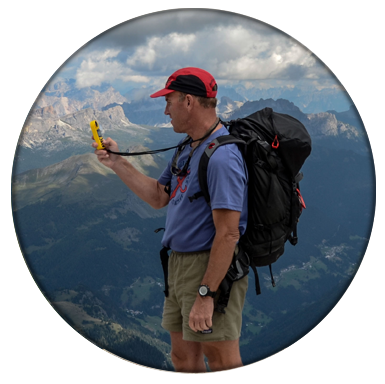
If you’ve spent any time outdoors, you know that Mother Nature can be unpredictable and the weather can change at the drop of a hat. It’s important to monitor the weather to ensure that you aren’t caught unprepared. Kestrel Meters are ideal for just that – slip one in your pack and you have a pocket-sized meteorologist traveling with you. Barometric pressure and dewpoint help to predict weather trends; wind chill and heat stress index measurements warn of dangerous conditions for long-term exposure. Research expeditions also need a simple, reliable, light weight tool to log conditions. Kestrel meters have been to the top of Everest, the North and South Poles, and virtually everywhere in between. Take one on your next trip.

Skiing, Snowboarding, Snowmaking, Avalanche Control, Search & Rescue

Snow conditions can change by the minute. All Kestrel Meters feature an external temperature sensor making snow temperature measurement as simple as sticking the unit right into the snow pack. Set up a Kestrel to track conditions relating to snowmaking right where the equipment is operating. Equip ski patrol with a Kestrel to provide condition reports from all areas of the mountain.

Avalanche and search & rescue teams need to quickly and accurately assess the conditions wherever they’re working. A Kestrel Meter allows ground crews to report the density altitude and ground conditions to the rescue helicopters for safe evacuations. Working dog handlers can make use of Kestrel Meters to monitor the wind speed, temperature and humidity conditions and keep their dogs working safely and effectively.

Sailing, Wind Surfing & Kiteboarding

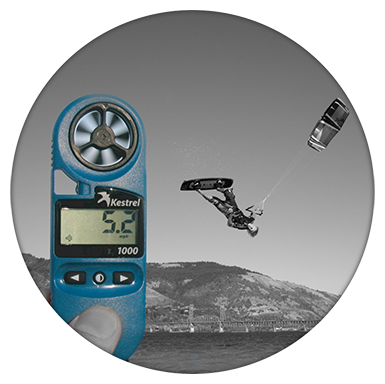
The Kestrel is ideal as an on-board weather station for both large and small craft. Use a Kestrel 1000 to assess wind speeds and sail setup, or step all the way up to the Kestrel 5500 to monitor all weather conditions. Automatic data storage and on-screen barometric pressure trend graphs make it easy to track developing storms. Every Kestrel is completely waterproof, so you don’t have to worry about dropping it overboard.

For other water-based activities, you need to know the wind speed right where you are wind surfing or kite boarding. Plus, the Kestrel 2000 and higher let you measure air and water temperature. The Kestrel plays as hard as you do – it’s completely waterproof, and has a sturdy slip-on cover.

Canoeing, Kayaking, Paddling, Rowing, SUP

Avid paddlers like to know the wind speed and water temperature, and the Kestrel is the perfect tool. Paddle guides love to be able to answer their clients’ questions about just how strong that wind is they’re paddling into. Tie a 3-ounce Kestrel onto your life vest and know the facts wherever you paddle. Every Kestrel is compact, light and waterproof – there’s no need to be a weather guesser.

Motorsports, Drag racing

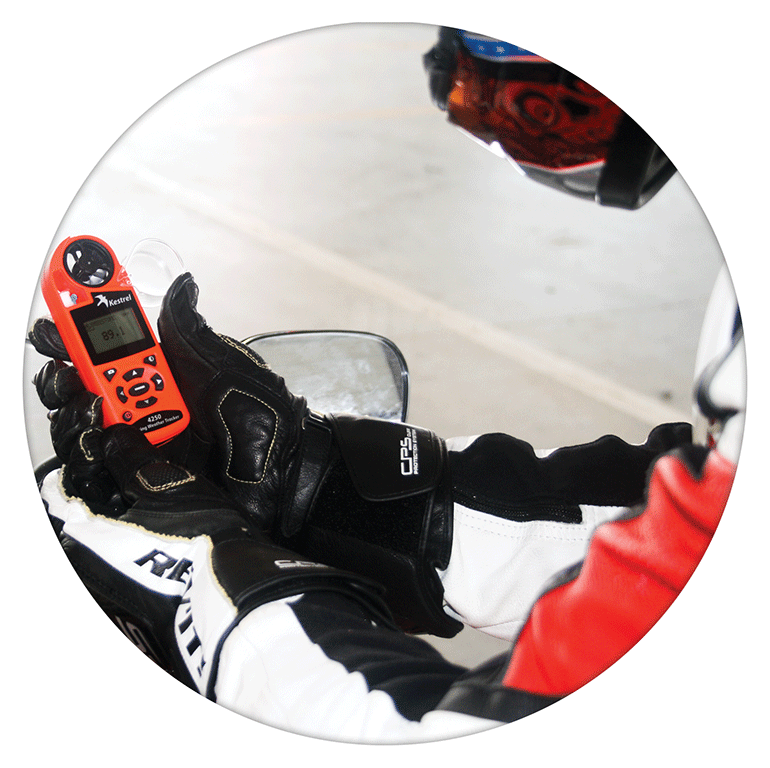
Even slight fluctuations in weather conditions like temperature, humidity, barometric pressure and density altitude can affect your car’s performance. Kestrel Weather Meters provide quick, accurate information to help you decide what changes need to be made, before even making a lap around the track or a pass down the drag strip. Portable and easy-to-use, Kestrels give racers and pit crews relevant data to gain that competitive edge at a fraction of the cost of other systems currently on the market.

In pits around the country, racers have been trading in their bulky and expensive weather monitoring stations in favor of the portable Kestrel 5100 Racing Weather Tracker.

The Kestrel 5100 Racing Weather Tracker is the next generation of weather monitoring. It measures every environmental condition with unrivaled ease and accuracy — and all in a cell-phone sized package. Temperature, humidity, barometric pressure, and density altitude are all continuously measured, and data is stored either manually or automatically. A 1600-point data log lets you keep track of the conditions for each race day, and the optional computer interface lets you upload all the data to your PC or laptop — making long-term storage, in-depth analysis, and detailed charting of stored data a breeze.

Heat Stress Safety - Athletics

Preventing exertional heat stress in athletics has become an important responsibility of many athletic trainers, coaches and other sports-related health-care providers. At every athletic endeavor, from little league through professional sports and adventure racing, lives depend on the accurate measurement of environmental conditions such as temperature, relative humidity, heat stress index, wet bulb temperature, wet bulb globe temperature (WBGT) and several other environmental parameters. An affordable, accurate Kestrel Heat Stress Tracker and tripod-mounted vane make up the most capable heat stress monitoring station available. And for track and field events, you get the added bonus of having a full-fledged wind monitor as well

Aviation - Backwoods, Ultralights, Helicopters, Gliders, Hang Gliders, Paragliders, Ballooning, Drones, RC Aircraft

Whether you fly a private plane, small helicopter, ultralight or glider, it’s critical to know the weather when taking off and landing. Pilots who fly into remote locations will particularly appreciate the Kestrel 5500 with crosswind, headwind, wind speed, wind direction, altitude, barometric pressure and density altitude readings all from one handheld device. Hang gliding, paragliding, parachuting and ballooning all are influenced heavily by one thing – the wind. And even when you’re piloting from the ground, drones and RC aircraft can be irreparably damaged by misjudged winds. Be safe and protect your investment with wind measurements to 3% accuracy at your exact takeoff or landing location or drop zone with a Kestrel wind meter. The large replaceable impeller ensures accurate readings, and the waterproof case and slip-on cover ensure your investment will last for years of flights.